IOI
IOI
Prime Minister Narendra Modi’s visit to Australia this week underscored the growing strategic and economic partnership between India and Australia, even as a far-right anti-immigration activist briefly disrupted security arrangements in Melbourne. The incident, involving Australian far-right figure Hugo Lennon, drew media attention after he reportedly entered the hotel where Prime Minister Modi was staying and shouted abusive anti-India and anti-immigration slogans before being removed by police. Australian authorities responded quickly, and there was no impact on the official diplomatic engagements.
While isolated protests often attract headlines, they did little to overshadow the broader purpose of Modi’s visit: strengthening bilateral cooperation between two of the Indo-Pacific’s most important democracies. The visit focused heavily on trade, investment, clean energy, critical minerals, defence cooperation, education, and technology partnerships, reflecting the rapidly expanding economic relationship between India and Australia.
Growing Trade Partnership
India and Australia have significantly expanded their economic relationship in recent years. The Economic Cooperation and Trade Agreement (ECTA), which came into force in 2022, has boosted bilateral trade by reducing tariffs, improving market access, and creating new opportunities for businesses in both countries.
Australia views India as one of its fastest-growing export markets, while India sees Australia as a trusted supplier of critical minerals, education services, agricultural products, and energy resources. Both governments are also working toward a Comprehensive Economic Cooperation Agreement (CECA), which aims to deepen investment and remove additional trade barriers.
During the Melbourne visit, discussions reportedly included expanding cooperation in green hydrogen, renewable energy, advanced manufacturing, digital innovation, and critical minerals—industries expected to play a major role in the global economy over the next decade.
Indian Diaspora Strengthens Business Links
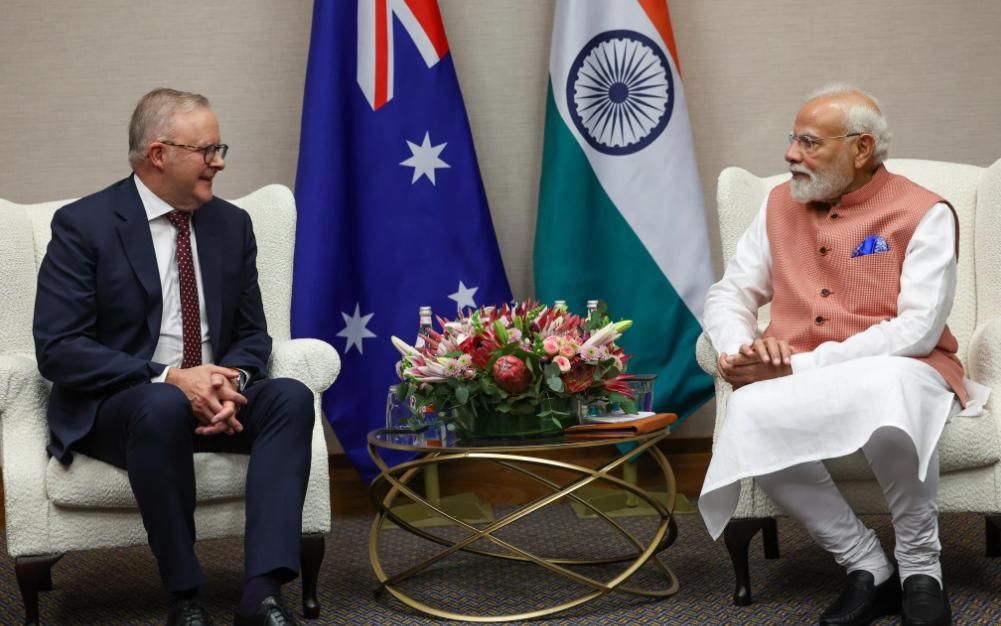
One of the defining features of India-Australia relations is the rapidly growing Indian diaspora in Australia. Tens of thousands of Indian-Australians gathered at Melbourne’s Marvel Stadium to welcome Prime Minister Modi, highlighting the community’s growing economic and cultural influence.
The Indian community has become one of Australia’s largest migrant groups, contributing across healthcare, education, information technology, finance, engineering, hospitality, and entrepreneurship. Their success has strengthened business relationships between the two countries while encouraging investment, tourism, and educational exchanges.
Isolated Protest Does Not Define Bilateral Relations
The disruption by Hugo Lennon represents the actions of an individual associated with Australia’s far-right movement rather than the position of the Australian government or the broader Australian public. Police quickly intervened after Lennon reportedly shouted anti-India and anti-immigration slogans from the hotel before escorting him away. Similar demonstrations were held outside public events, but official engagements continued as scheduled under heightened security.
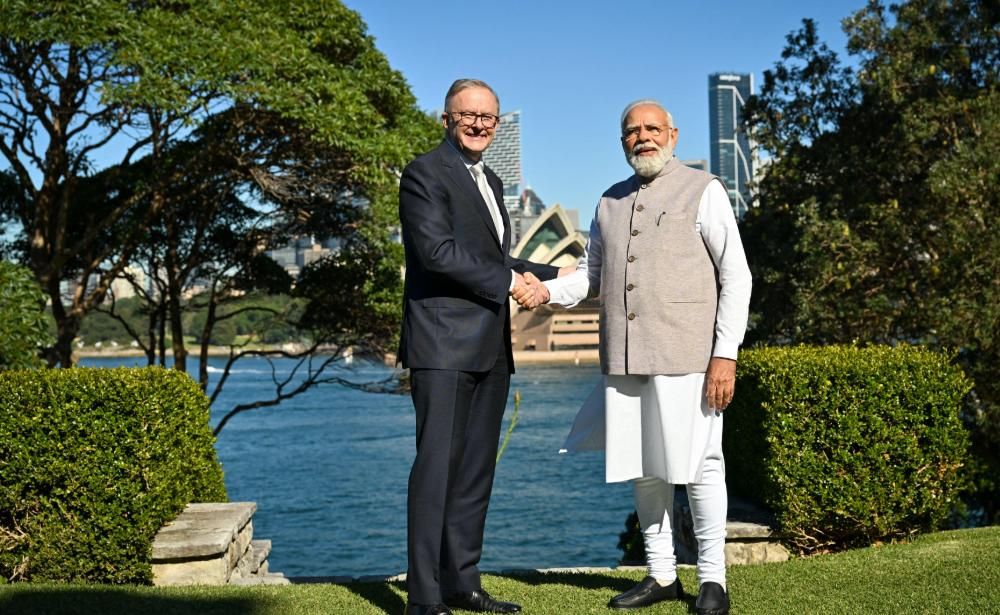
Australian Prime Minister Anthony Albanese reaffirmed Australia’s commitment to strengthening ties with India throughout the visit. State leaders and business representatives also participated in meetings focused on expanding commercial cooperation and investment opportunities.
Strategic Importance Beyond Trade
India and Australia now share interests that extend well beyond commerce. Both nations are members of the Quad grouping alongside the United States and Japan, cooperating on regional security, maritime stability, resilient supply chains, cybersecurity, and emerging technologies.
Defence collaboration has also expanded through joint military exercises, intelligence sharing, and greater cooperation in the Indo-Pacific region. These strategic partnerships complement growing economic ties and demonstrate that the relationship has evolved into a comprehensive strategic partnership.
Looking Ahead
Although protests generated temporary headlines, the larger outcome of Prime Minister Modi’s visit was the continued strengthening of India-Australia relations. Business leaders from both countries remain optimistic about expanding trade in renewable energy, digital technologies, manufacturing, education, healthcare, and critical minerals.
For India, Australia represents an increasingly important economic partner capable of supporting its manufacturing ambitions and energy transition. For Australia, India’s rapidly growing economy offers significant long-term opportunities for exports, investment, and innovation partnerships.
As geopolitical and economic cooperation continues to deepen, isolated incidents are unlikely to derail the momentum of one of the Indo-Pacific region’s fastest-growing bilateral relationships. The focus remains on expanding trade, strengthening strategic cooperation, and creating new opportunities that benefit businesses and citizens in both countries.