IOI
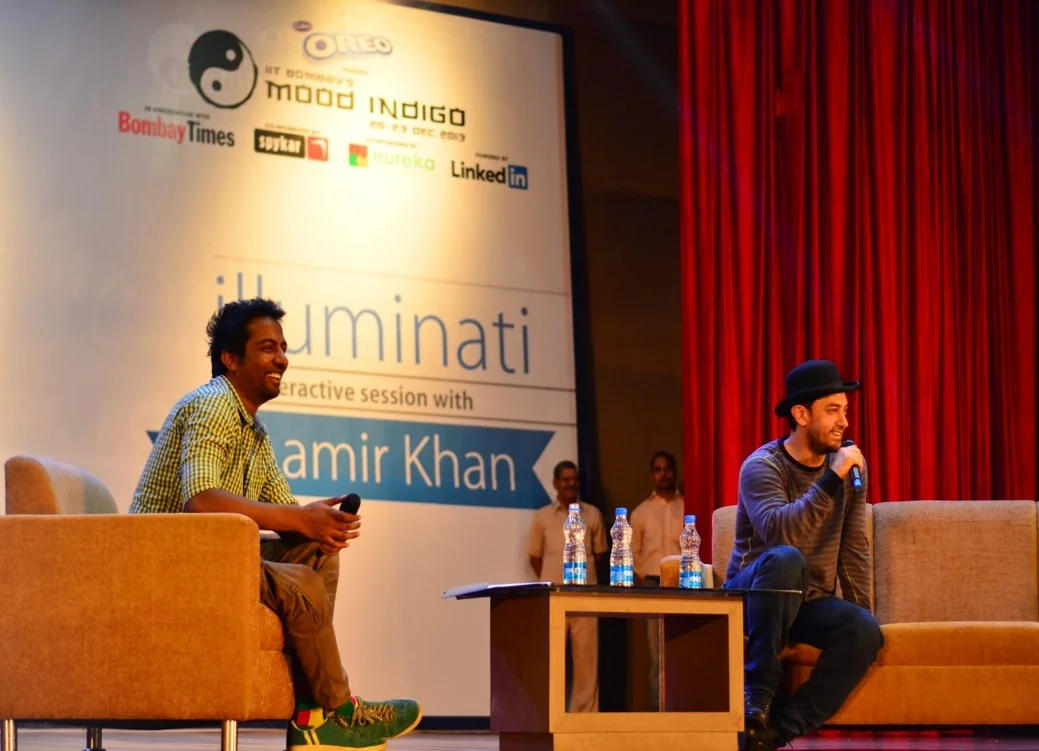
On October 22, Aamir Khan sat on a stage in the Grand Ballroom at Marina Bay Sands to receive the Singapore International Film Festival’s Screen Icon Award. Past recipients include Michelle Yeoh and Youn Yuh-jung. The conversation that followed was expected to cover hits, flops and the long-rumoured 3 Idiots sequel, and it did. The moment people remembered, though, was when he broke down talking about time.
“It’s okay to work like a madman, completely obsessed with what you’re doing for one year, two years, five years,” he said, according to Variety. “But if it goes on for 30 years, I mean, you’ve lost your relationships. Your kids have grown up, they’re adults now. So I felt a deep sense of loss.”
It was an unusually personal moment from a star who has spent two decades using his films to talk about everyone else’s lives. Seen through his career, the admission fits a pattern. Aamir Khan’s most lasting contribution may not be any single box-office record. It is a habit of treating popular entertainment as a tool for social change, and then checking whether the change actually happened.
The workaholic who learned to switch off
Khan told the Singapore audience that the reckoning came during the Covid lockdowns. For the last four years, he said, he has deliberately made time for family. “I’m so glad that this thought occurred to me when I was 56 and not when I was 86, when it would be really too late to do anything about it.”
He has also switched off his phone. The Straits Times reported that he described himself as having “a very addictive personality” that endless reels could easily feed, and said he worries about a generation that has never known boredom. “You must have time to waste,” he said, “so that your mind starts taking over.”
For an India that is debating 70-hour work weeks and screen time in the same breath, that is a useful message from one of the country’s most famous perfectionists.
From a classroom film to a national conversation
Khan made his directing debut with Taare Zameen Par (2007), the story of an eight-year-old boy whose dyslexia is mistaken for laziness. In Singapore he called it the film that changed him most. While researching it, a doctor told him that what children need most is security, dignity, trust and faith, with love coming last, “like dessert after a good meal”, as the Straits Times put it. He later found that adults need the same things.
Its effect went well beyond the box office. In 2008 the Washington Post reported that the film had “planted the seeds of a movement to raise public awareness about dyslexia in India.” Seven years later, at a Kolkata seminar reported by the Times of India, experts said it had done more to help identify dyslexic children than years of NGO effort. Divya Jalan of the Dyslexia Trust of Kolkata said parents began recognising the condition in their own children, and schools began appointing counsellors.
Two years later, 3 Idiots (2009) carried the argument from the classroom to the engineering campus. Reviewing it for the Hindustan Times, Mayank Shekhar described engineering and medicine as having been “potential suicide notes” for young Indians, and called the system the film targets “a cruel, classist examination system” built on rote learning. Fifteen years on, director Rajkumar Hirani told the Times of India that the film gave many people the courage to pursue what they actually wanted to do.
Its spiritual sequel, Sitaare Zameen Par (2025), went a step further. Instead of actors playing disability, it cast ten debutant neurodivergent actors, including people with Down syndrome, autism and Fragile X syndrome, as Hindustan Times reported. The film’s message, “Sabka Apna Apna Normal”, roughly means that everyone has their own normal.
Daughters, dreams and missing brides
Dangal (2016) told the story of Mahavir Singh Phogat training his daughters to wrestle in a sport long seen as a male preserve. The real stakes were already on record. At the 2010 Commonwealth Games in Delhi, Geeta Phogat became the first Indian woman to win wrestling gold at the Games, The Quint recalled, and in 2012 she became the first Indian woman wrestler to compete at the Olympics, according to India Today. The film became the first Indian title to cross ₹2,000 crore worldwide, The Indian Express reported, and in China, where Variety said it resonated “as a female empowerment story”, it earned more than it had in India.
Secret Superstar (2017), produced by Khan, followed a teenage girl who sings on YouTube in a burqa while her mother endures an abusive marriage, a story the South China Morning Post described as “a tough story about domestic abuse and female empowerment”. Laapataa Ladies (2024), produced by Aamir Khan Productions and directed by Kiran Rao, follows two newly married brides swapped on a train journey. In September 2024 the Film Federation of India chose it as India’s official entry for the 97th Academy Awards, The Hindu reported.
Television that changed policy
Satyamev Jayate premiered on May 6, 2012, with an episode on female foeticide. It featured a sting operation by journalists Shripal Shaktawat and Meena Sharma. Within days Khan met Rajasthan Chief Minister Ashok Gehlot to ask for the cases to be fast-tracked, The Hindu reported. Gehlot doubled the reward for informants from Rs 50,000 to Rs 1 lakh, according to India Today. The Rajasthan High Court gave in-principle approval for a fast-track court, as DNA reported.
Foeticide was only the opening episode. Over its first season, the show went on to examine child sexual abuse, dowry and the big fat Indian wedding, medical malpractice and the lives of people with disabilities, News18 noted in its episode guide.
Few talk shows can claim that kind of follow-through. The idea behind it is one Khan has put simply in interviews: entertainment is not just about making people laugh, but about what moves them.
From screen to soil: the Water Cup
The show’s most tangible legacy is in drought-hit Maharashtra. Khan and Kiran Rao co-founded the Paani Foundation, which ran the Satyamev Jayate Water Cup from 2016 to 2019. It was a 45-day pre-monsoon contest in which villages competed to build water-harvesting structures through shramdaan, or voluntary labour. According to the Paani Foundation, more than 6,000 villages from 76 blocks took part and created over 550 billion litres of water storage capacity.
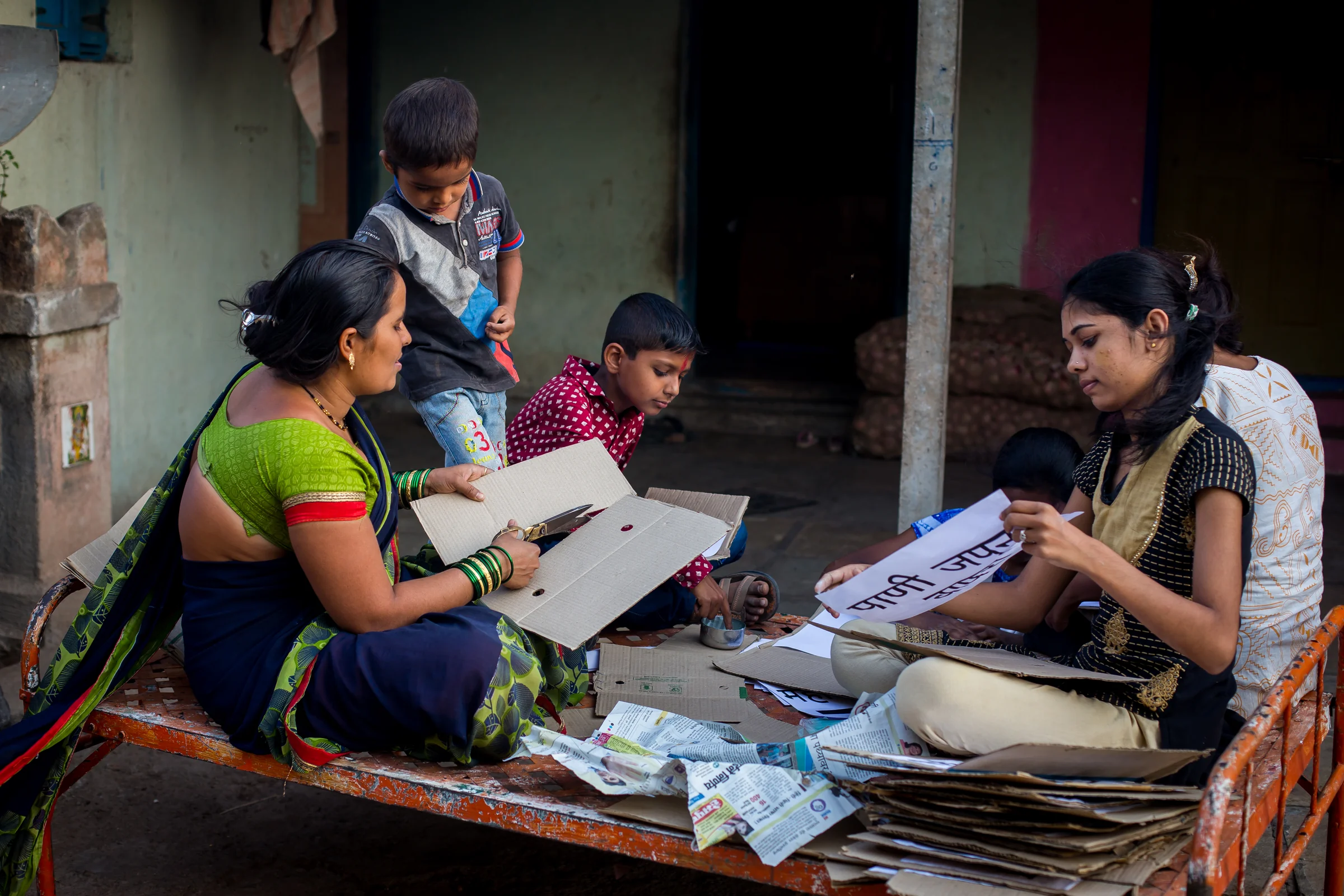
The model is worth studying. It turned a television audience into a competition, the competition into a training programme, and the training into community ownership of local watersheds. Celebrity got people to pay attention, but the villages did the digging.
A ₹100 bet on how India watches films
Khan’s latest experiment is about distribution. Six weeks after its theatrical release, Sitaare Zameen Par skipped the usual streaming deal. It went to YouTube as a ₹100 pay-per-view rental in India, and was also offered in 38 international markets, according to Google. Khan said he had turned down a Rs 125 crore streaming offer, and later claimed the film earned “20 times” its normal business on the platform, the Indian Express reported. YouTube does not disclose pay-per-view numbers.
The India angle is clear. Khan told the Times of India that he first thought of pay-per-view in 2011, after 3 Idiots, but digital payments were not yet easy. UPI, he said, finally made it possible. In his view, only about 2–3% of Indians watch films in theatres. If that is true, a ₹100 rental on a phone could reach far more of India than a multiplex ever will.
The human question in an AI era
Khan also spoke frankly in Singapore about technology. He called AI a tool, much like visual effects, that can help him tell stories better. He recalled that building a castle set once took 200 carpenters. “My common sense is telling me that in the short term, for sure, people are going to lose jobs,” he said, Variety reported. He still believes humans will be needed to judge what works.
That may be the real thread running through his career. Whether the subject is a dyslexic child, a drought-hit village, a ₹100 movie ticket or a 61-year-old learning to put his phone down, Khan keeps returning to the same question. The question is not what technology or fame can do, but what they are for.
Sources: Variety, The Straits Times, SGIFF, The Washington Post, Times of India, Hindustan Times, The Hindu, India Today, DNA, The Indian Express, The Quint, South China Morning Post, News18, Paani Foundation and Google India, linked above.
Story by Anjali