IOI
Story by Anjali
Four days before Americans vote in the 2026 midterm elections, one name sits clearly at the top of the donor tables. Elon Musk, the Tesla and SpaceX chief executive, has given more money to this year’s contests than anyone else on record. Nearly all of it has gone to groups working to keep Republicans in control of Congress.
How the money got there matters as much as the total. Most of Musk’s spending went through super PACs, which can legally accept unlimited sums, not through donations to candidates. Musk is also more than a donor. He runs companies with a direct stake in Washington, and in New Delhi too.
The numbers, and how they grew
On 12 October the Associated Press reported that Musk had “quietly become the biggest known donor in this year’s midterm elections”, giving more than $276 million since July. The New York Times reported the figures first. A spokesperson for Musk’s super PAC confirmed them to AP, and another confirmed them to CNBC.
According to AP, the largest single gift was $158 million to the Senate Leadership Fund, the main super PAC backing Republican Senate candidates. AP called it one of the largest known political donations in American history. Another $76 million went to America PAC, the group Musk founded in 2024, which runs a large get-out-the-vote operation. A further $10 million went to Lone Star Liberty PAC, which supports Ken Paxton, the Republican Senate nominee in Texas. CNBC also listed $20 million to the Congressional Leadership Fund, the main House Republican super PAC, plus $10 million to the Republican Governors Association and $2 million to the Republican Attorneys General Association. CNBC put Musk’s known federal giving for the 2025–26 cycle at roughly $366 million, already above the roughly $290 million he spent in 2024.
The total has kept growing. On 23 October Forbes reported, from Federal Election Commission filings, that Musk had given America PAC another $74.8 million between 6 and 14 October, plus $1.98 million through one of his companies. The same day, a Washington Post analysis of FEC data put his cycle total at $446 million. That includes about $216 million to America PAC, $168 million to the Senate Leadership Fund and $30 million to the Congressional Leadership Fund. The Post described him as “the largest individual political donor in modern American history.”
The spending reverses what Musk said in May 2025. “I think I’ve done enough,” he said then, according to AP. CNBC quoted him saying: “In terms of political spending, I’m going to do a lot less in the future.” He had just left his role leading the Department of Government Efficiency and had fallen out with President Donald Trump. AP reports that the two have since reconciled. Trump presented Musk with the National Medal of Science in early October.
Where the money is landing
Texas is the clearest test. Forbes, citing FEC records compiled by the PaidForPolitics tracker, reports that America PAC has spent about $27.9 million opposing the Democratic nominee, James Talarico, and $4.8 million supporting Paxton. Ohio, Michigan, Iowa and Maine follow. CNBC noted that Talarico led Paxton 48.4% to 45.0% in FiftyPlusOne’s polling average as of 12 October.
The two sides describe the same money in very different ways. Musk says the stakes justify the spending. “Control of the senate will decide the future of America,” he posted on 19 October. Talarico says the problem is the system: “There is something deeply wrong with a political system that allows one trillionaire to buy his own personal U.S. Senator.”
Tech wealth on both sides of the ledger
Musk is the biggest donor this cycle, but other large donors are giving too. The Washington Post counts more than $2.7 billion from the 50 biggest donors. About $1.7 billion of that comes from Republican-leaning givers, $832 million from Democratic-leaning ones and $264 million from bipartisan and special-interest groups.
Technology and crypto money appears on both sides of that list. On the Post’s tally, venture capitalists Marc Andreessen and Ben Horowitz have given $92.2 million, much of it to the pro-crypto super PAC Fairshake. OpenAI president Greg Brockman and his wife, Anna, have given $50 million, split between MAGA Inc. and the AI-focused super PAC Leading the Future. The Winklevoss twins have given $55.9 million. On the Democratic side, LinkedIn co-founder Reid Hoffman and Michelle Yee have given $41.2 million. George Soros has given $102 million, and Mike Bloomberg $84.2 million. Crypto firms Coinbase and Ripple also appear in the Post’s top 50. Jeff Bezos, by contrast, has given just $15,000 this cycle.
Supporters of large-scale giving say it is legal, it is disclosed, and both parties benefit from it. Critics say a handful of very wealthy people now have outsized influence over who governs. Musk’s case draws particular attention because of his ties to the government. CNBC notes that SpaceX is a major NASA and Pentagon contractor. In September, Defense Secretary Pete Hegseth named Musk co-director of Project Meridian, a Pentagon panel studying the future of warfare.
Why India is watching
Midterms decide who controls Congress, and Congress writes the sanctions, trade and immigration laws the White House works within. Several of those laws bear directly on India right now.
The trade deal. India and the US announced a framework for a first-phase trade agreement on 7 February. Under it, the US tariff on Indian goods was to fall from 50% to 18%. The US Supreme Court’s ruling against those tariffs then reopened the terms. Indian exports now face an additional 10% duty under a Section 301 forced-labour finding. BusinessLine reports that New Delhi does not want to accept anything higher. Commerce Minister Piyush Goyal says the deal is being fine-tuned. Secretary of State Marco Rubio told The Indian Express that “99 per cent of the work” was done.
Russian oil. This month the US paused the Lindsey O. Graham Sanctioning Russia and Iran Act of 2026, citing high fuel prices. The Indian Express reports that the law gave President Trump powers to impose tariffs of up to 100% on buyers of Russian oil, such as India and China. Rubio said the India trade deal was taken into account in the decision. Whether the pause holds may depend partly on the balance of power on Capitol Hill.
H-1B. The $100,000 payment for certain new H-1B workers has been extended on paper to September 2027. Federal courts in Massachusetts and California have since blocked the policies that put it into effect, and USCIS says it is complying while the government appeals. A separate, permanent fee of about $103,000 proposed by the Department of Homeland Security has not been finalised. Lasting changes to the programme would need Congress.
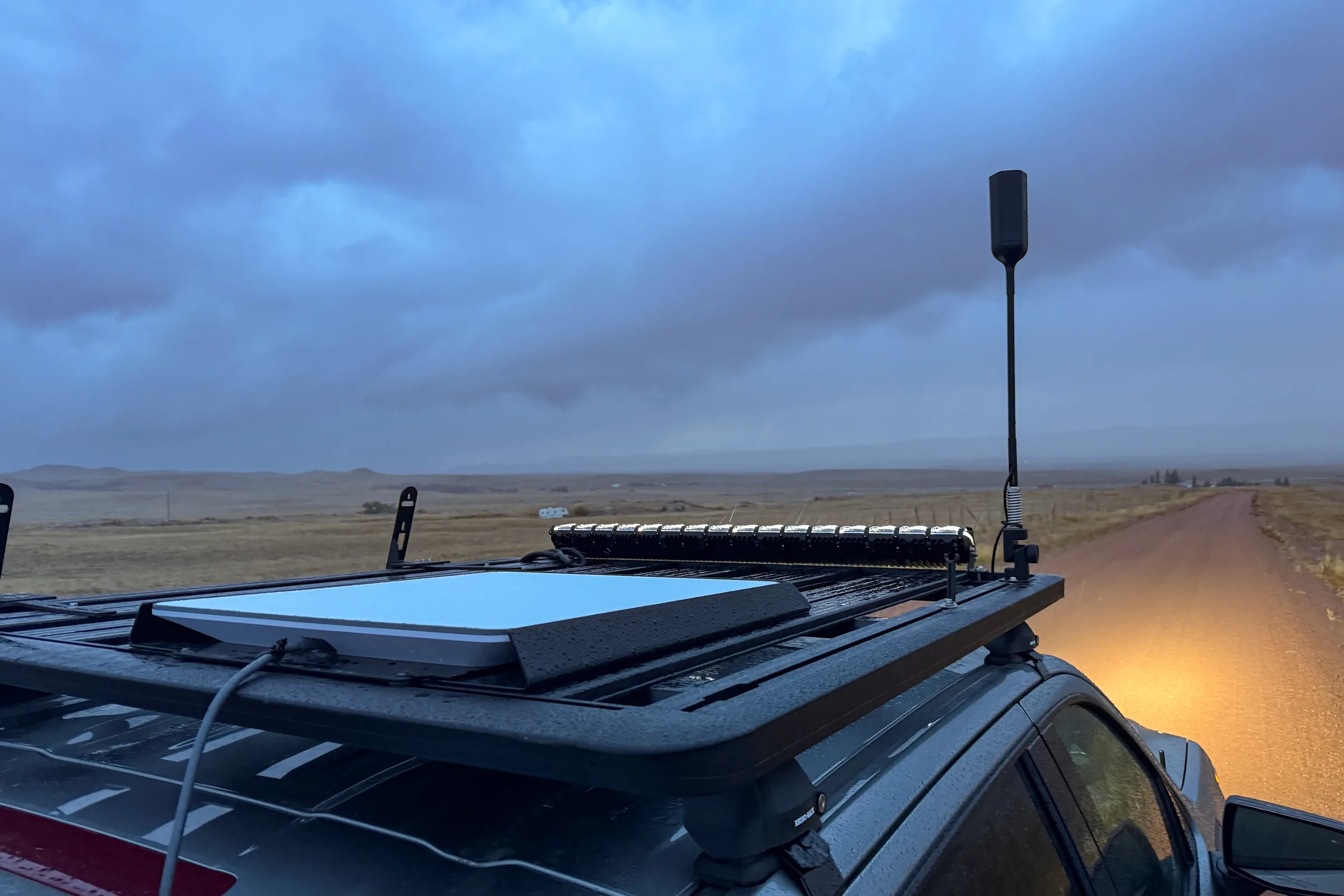
Starlink and Tesla. Musk’s own India story is moving at the same time. Starlink holds a satellite communications licence and IN-SPACe authorisation. On 7 October Musk blamed “certain oligarchs” for delaying its launch. The Ministry of Communications replied that the framework is “fair and non-discriminatory”. It said security assessments are under way for Starlink, Jio Satellite Communications and Eutelsat OneWeb, which it described as being at “broadly the same regulatory stage.” Tesla, meanwhile, now runs experience centres in seven Indian cities, most recently Noida, and sells the Model Y from Rs 50.89 lakh.
None of this means a midterm result will settle India’s questions. Trade and visa policy are driven largely by the White House. Starlink’s clearance is a decision for New Delhi. Still, the outcome will shape how much room each side has in Washington. It will also show how much a single donor’s money can move a national election.
What to watch on 3 November
Polls close on Tuesday, 3 November in the US, so results will start arriving in India on Wednesday morning. The Texas Senate race is the clearest test of Musk’s spending. Party control of the Senate and the House will matter most for India-related legislation. Further FEC filings due after the vote will show the final scale of Musk’s giving.
Related reading: Trump’s crowd cheered in Ohio. Indian media told a different story