IOI
Every few years, someone builds a thing so outrageous that the rest of the industry has to stop and stare. On the night of 15 October in Texas (the morning of 16 October in India), that thing was a car. Tesla’s new Roadster drove up a near-vertical ramp, flipped through the air on cold-gas thrusters and landed on its wheels. In the same fortnight, the man behind it was in a very different fight: trying to get a Starlink India launch approved, and taking on Mukesh Ambani’s Reliance Jio on X along the way.
Two stories, one week, one lesson. Building something extraordinary is brutally hard. Tearing someone down takes one post.
The night a car flew
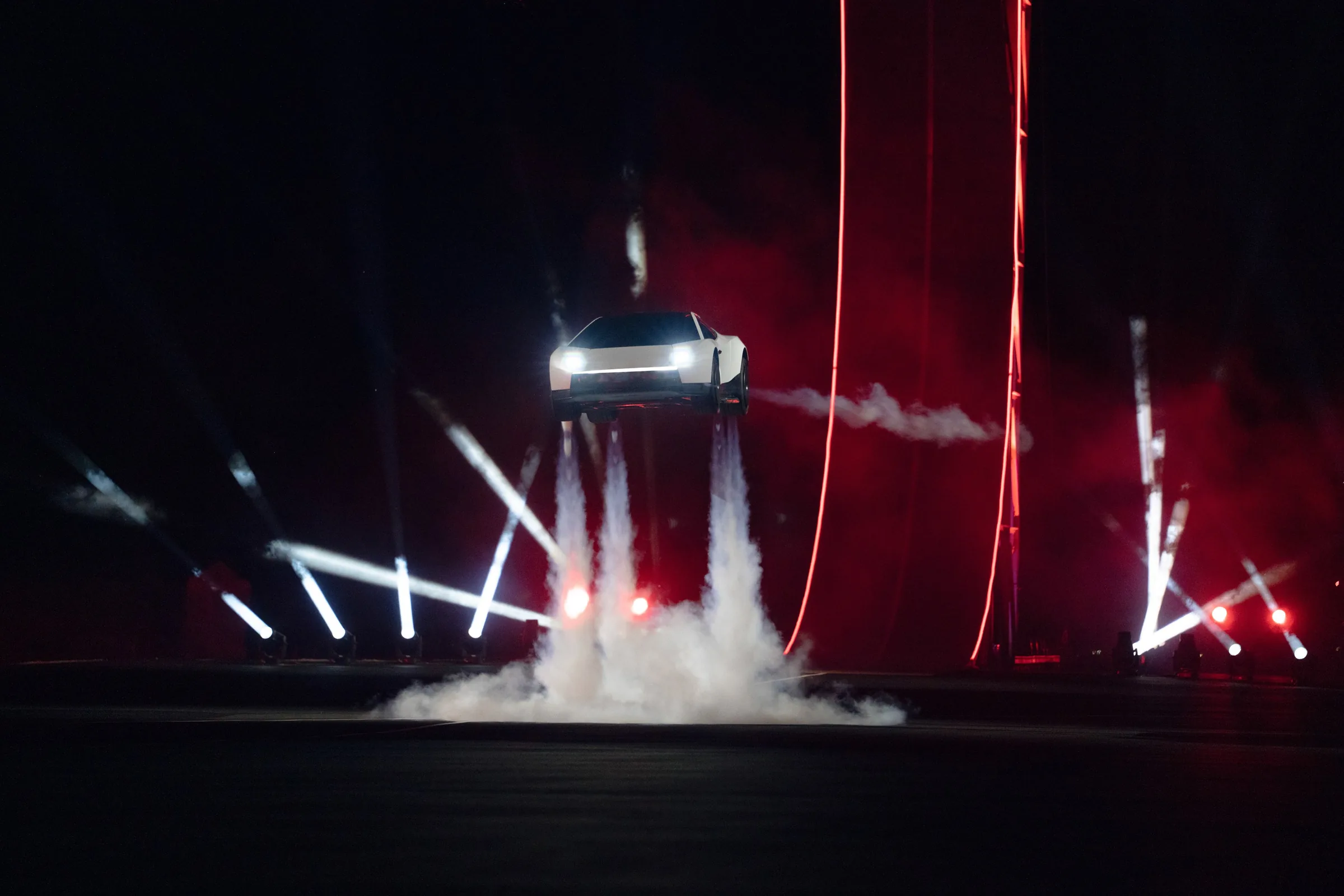
The event at SpaceX’s site in McGregor, Texas, lasted under 30 minutes and felt “more like a stunt show than a product reveal”, as The Verge put it. A fan system under the car, supplied by SpaceX, sucked it onto the ramp with up to two G of force. Cold-gas thrusters then flipped it and lowered it gently back to earth. It also hopped over Tesla’s whole line-up, including the Model 3, Model Y, Cybertruck, Semi and Cybercab, in what Tesla engineering VP Lars Moravy called a “kick flip”.
The numbers are just as wild. Tesla claimed a 0–60 mph run in 0.81 seconds. The thrusters run on plain compressed air, about 250 kg of it, stored in two ultra-high-pressure tanks and fired through 10 nozzles. “So it can basically fly like a rocket,” Musk said, before adding honestly: “this is not necessarily a safety-optimized car. But it takes the fun meter to 11 out of 10.”
Musk’s own verdict took eight words, and it has drawn more than 78 million views:
To be fair, there are big caveats. There is no price yet, production is promised for 2028, and the flip-capable version will not be road legal. The Roadster itself was first promised for 2020.
Shocked innovators, humbled rivals
The reactions said as much as the demo. Even Sam Altman, one of Musk’s best-known adversaries, could not resist:
Bloomberg Law reported that Donald Trump and Google’s Sundar Pichai were also among those praising the car.
The most telling response came from a rival. In an Instagram video, Bugatti Rimac CEO Mate Rimac revealed that his team had explored fan downforce in 2019 and cold-gas thrusters for a Nevera successor in 2020, before shelving them to focus on the Tourbillon’s V16. Instead of claiming credit, he applauded. “I’m happy that Elon did it, that Tesla did it, that McMurtry did it,” he said, as quoted by Road & Track. “It’s more exciting; it makes the future even more exciting.”
That is what humility looks like among builders: you know how hard the thing is, so you respect whoever ships it first. Not everyone was convinced, though. Tech reviewer Marques Brownlee asked on X whether a 4,000-plus-pound car doing flips and promising half the speed of sound was “a prank”. Scepticism is healthy. But notice the difference between doubting a claim and dismissing the people who made it.
Meanwhile, the Starlink India fight
About a week before the Roadster flew, Musk had opened a very different front. On 7 October, while Starlink, Jio and Airtel executives were at the India Mobile Congress in Delhi, he posted that Starlink was “being blocked by certain oligarchs in order to maintain their monopolistic chokehold on the Indian people”, calling it “a crime against the people of India” (post).
The next day he named a name: “Starlink is licensed in over 165 countries… so why still no license? Is Ambani the real boss of India?” (post). On 9 October he went further, with a sarcastic open letter addressed to “Prime Minister Ambani” that drew more than 118 million views (post). His core argument was a serious one: Starlink could connect villages with poor or no coverage, giving children access to education and small businesses access to global markets.
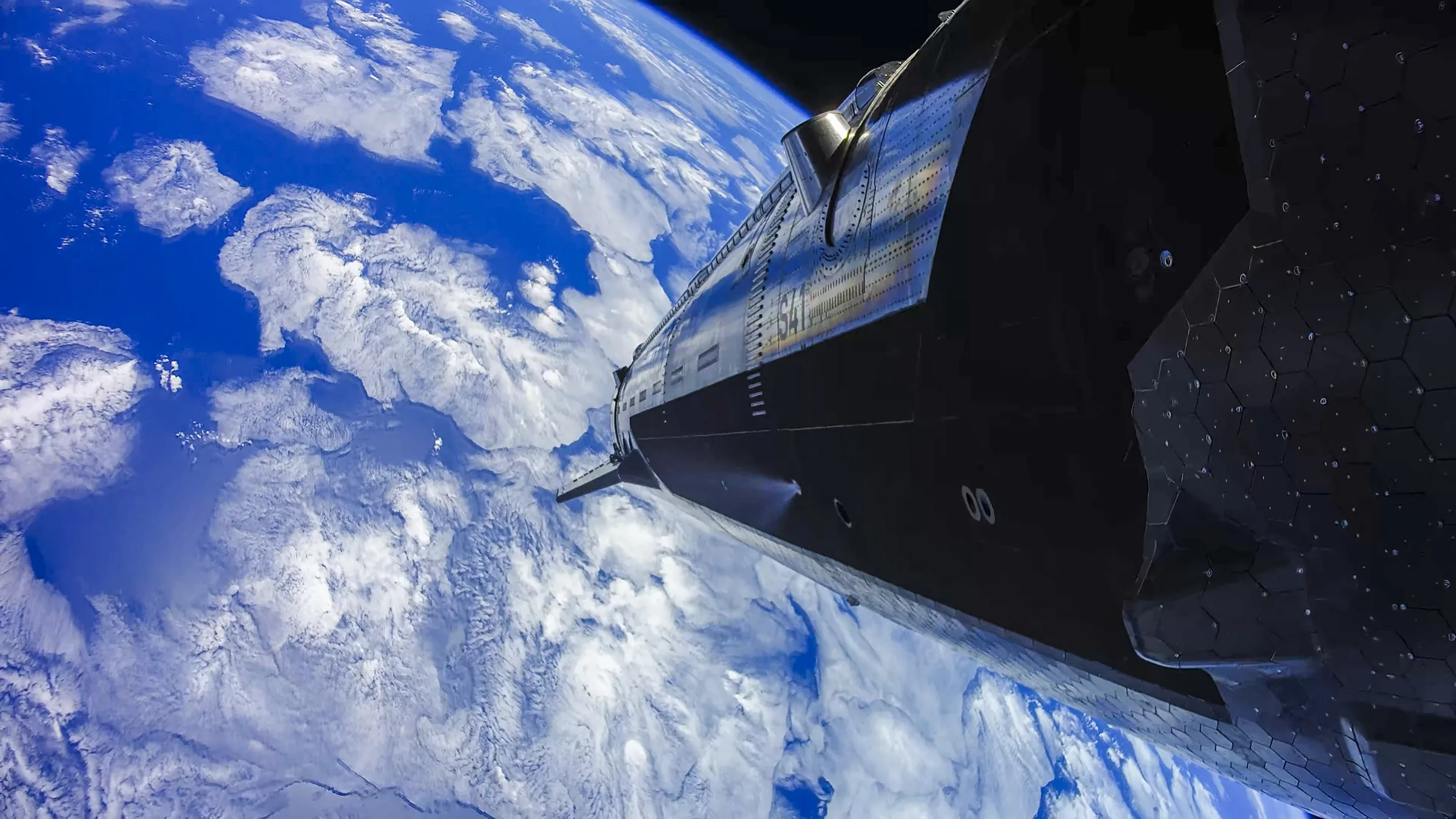
The other side deserves to be heard just as clearly. India’s Ministry of Communications said Starlink, Jio Satellite and Eutelsat OneWeb are all at broadly the same stage, each waiting for security clearance before spectrum can be assigned. It called claims of discrimination “baseless and misconceived” (BBC). Telecom minister Jyotiraditya Scindia said India “does not allow a monopoly in any sector” (TechCrunch). Mukesh Ambani himself has not commented publicly. At the India Mobile Congress, Jio chairman Akash Ambani said only, “We want to be heads down and deliver value to our Indian consumers.”
On 16 October, Reliance put out a calm, firm statement:
“At Reliance, we have never feared competition,” it said, adding that it welcomes Starlink and that “every player, Jio included” must follow Indian law. Starlink replied the same day, quoting Reliance’s post:
Some history helps. The two companies had already clashed over how satellite spectrum should be given out: Jio pushed for an auction, while Starlink wanted administrative allocation. India chose the administrative route, though pricing and final assignment rules are still pending. And in March 2025, both Jio and Airtel signed deals to distribute Starlink in India, pending approval. Rivals and partners at once. That’s modern business.
Builders versus breakers
Here’s the uncomfortable truth: this row has two builders in it. Musk put a car in the air and thousands of satellites in orbit. Reliance launched Jio in 2016 with zero customers. Ten years later it has over 530 million and, in its own words, “some of the best digital infrastructure and most affordable data in the world”. Neither achievement happened by tearing someone down.
“It’s very easy to bring down an individual, It’s equally difficult to ideate, plan, innovate and execute an extraordinary feat! Hard to miss!”
— Jay Sharma, Founder & CEO of Rewire India (rewireindia.co)
That cuts every way. It applies to the sceptics who call a flying car a prank before it ships. It also applies to a debate where it is easy to cast one industrialist as a villain and the other as a saviour. The real question isn’t who is the “real boss”. It’s whether a farmer in a village without 4G gets a fast, affordable connection soon. That will come from a fair process finished on time, and from companies competing on service and price, not on insults.
Watch the Roadster reveal
See it for yourself in Tesla’s official replay of the event:
The bottom line
The Roadster showed what happens when people are free to attempt the absurd. India’s satellite internet race could show the same thing, with Starlink, Jio, OneWeb and others all launching and Indians choosing the best. Build, compete, let customers decide. Leave the tearing down to people who have never built anything.
Sources: The Verge, Electrek, Road & Track, Bloomberg Law, BBC, TechCrunch, The Hindu, The Economic Times.