IOI
Indian AI startups are raising far more money than a year ago, and fewer of them are getting it. That is the main finding from new Tracxn data shared with ET AI this week. Between January and September 2026, Indian AI startups raised $1.6 billion across 81 rounds, up from $677 million a year earlier. Over the same period, the number of rounds fell 43% from 142, and the number of companies that raised money fell 44%, from 126 to 70.
The money is going down the stack: to GPUs, data centres and the models that run on them. One day after those numbers came out, a ₹50,000 crore clean-power plan for an AI “compute factory” in Andhra Pradesh showed the same pattern in steel and silicon.
Four cheques, most of the money
According to Tracxn, four transactions made up 72% of India’s AI funding in the period. They were sovereign AI infrastructure provider Neysa’s $600 million round, generative AI company Sarvam’s $255 million, AI infrastructure provider Yotta’s $150 million and app-building platform Emergent’s $130 million.
“AI funding has risen in dollars but not in the number of deals and almost all of the rise comes from AI infrastructure rounds,” Tracxn co-founder Neha Singh told ET AI. She added that funding would have fallen without those large rounds.
The deals behind those figures are on the record. In February, Blackstone and co-investors agreed to put up to $600 million of equity into Mumbai-based Neysa. The company said it would use that equity to secure another $600 million in debt and deploy more than 20,000 GPUs in India. At the time, TechCrunch reported that Neysa had about 1,200 GPUs live. In June, Sarvam announced a $234 million first close of a planned $300 million Series B at a $1.5 billion post-money valuation, with HCLTech investing $150 million as the lead strategic investor. In August, an extension led by Nvidia followed, reported by Entrackr at about $74 million. (Tracxn counts Sarvam’s two 2026 rounds slightly differently, at $255 million and $90 million.)
The cheque-writers are changing as well. Blackstone led Neysa’s round, Sarvam’s investors include HCLTech and Nvidia, and Yotta’s round included the Serum Institute of India, according to ET AI.
Infrastructure takes three of every four dollars
Tracxn’s data shows AI infrastructure raised $1.2 billion across 19 rounds in the first nine months of 2026. That is 75% of all AI funding in India, and 8.3 times the $145 million the segment raised a year earlier.
Running that infrastructure takes a rare kind of engineering. “Building, interconnecting, cooling, and operating high-density clusters reliably requires specialised skills across power, cooling, networking and distributed systems,” Neysa chief product officer Karan Kirpalani told ET AI.
Where the power comes from
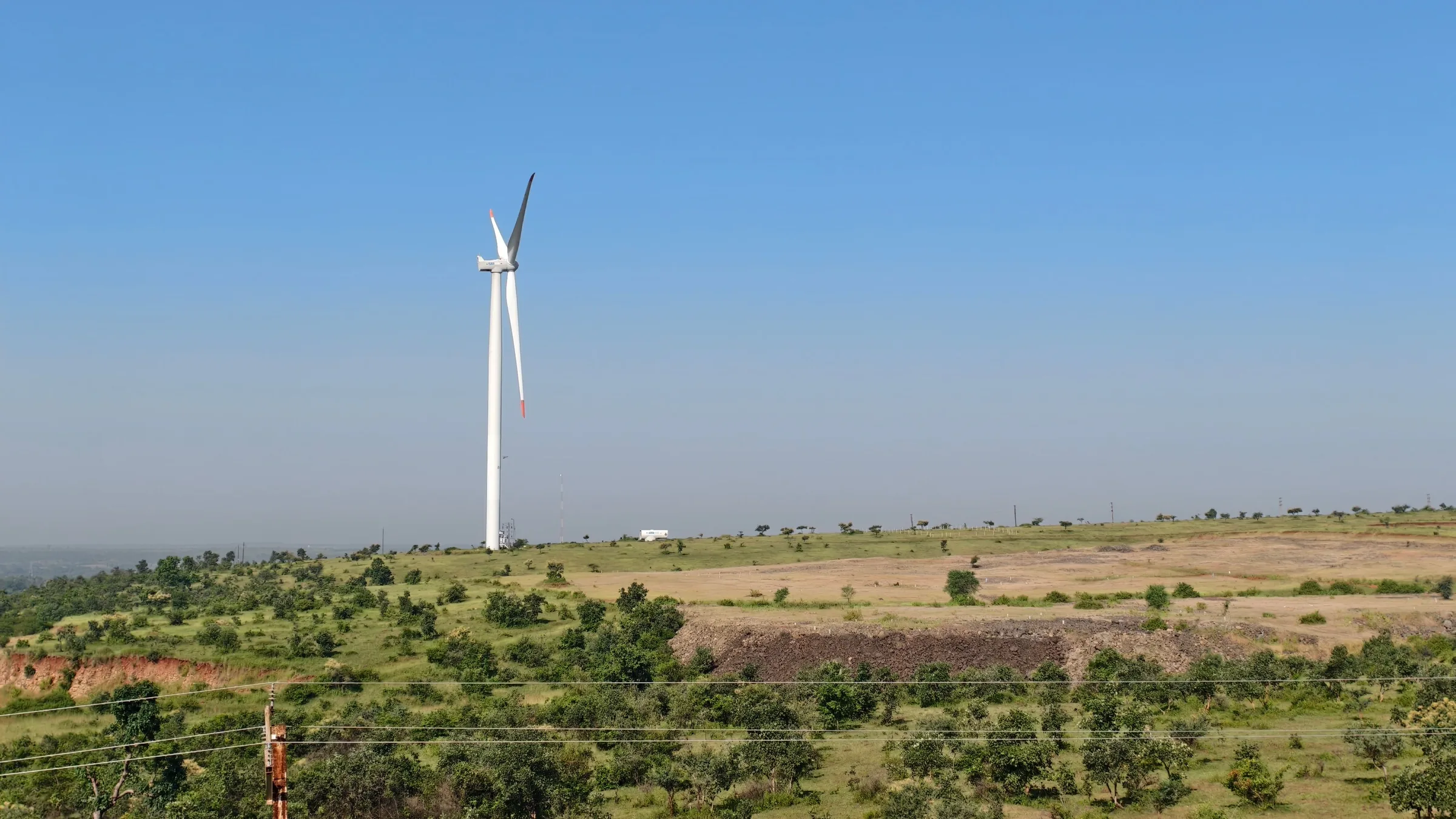
Compute needs electricity, and a lot of it, every hour of the day. On November 12, renewable energy company CleanMax signed an MoU with the Andhra Pradesh Economic Development Board to invest nearly ₹50,000 crore. The plan covers 3 GW of wind and solar generation and 1 GW of pumped hydro storage over the next five years, built to supply a 2 GW “Green Compute Factory” in Kurnool district. Neysa has signed on to anchor the park with 1 GW of IT load.
The company says the projects will be built in phases, with at least 1.5 GW of renewable capacity proposed by 2029. The plan also includes direct-to-chip cooling to limit water use and a skilling programme with Pratham Education Foundation to train local youth for compute-factory jobs. “Compute is becoming one of the largest new sources of power demand, and it needs clean energy that is available every hour of the day,” said CleanMax founder and managing director Kuldeep Jain.
The application layer’s first-customer problem
Further up the stack, the numbers look very different. Indian AI application startups raised $390 million across 62 rounds in the first nine months of 2026, down 27% from $532 million across 113 rounds a year earlier. Funding for vertical AI, meaning products built for specific industries, fell 87% to $41 million. Consumer AI apps raised just $1 million across three rounds. Enterprise AI applications were the exception, rising 70% to $348 million, although just two companies, Emergent among them, accounted for 79% of it.
Investors say a lack of ideas is not the problem. What worries them is how many products stand out and how many buyers commit. “Most of what gets pitched to us is still built on models trained elsewhere, and a good share of it is a thin layer on top,” Venkat Vallabhaneni, managing partner at Inflexor Ventures, told ET AI. On enterprise buyers, he said: “Indian enterprises love to pilot. They are much slower to sign a real purchase order, and a startup can lose a year in pilots that go nowhere.”
Workplace surveys show the same gap. The TeamLease Employment Outlook Report for HY2 FY 2026-27 found that 85% of employers report some workforce use of AI or generative AI tools. Only 13% report adoption across more than half their workforce, and 54% limit use to a quarter of employees or fewer. Most companies are trying AI. Far fewer have rolled it out widely.
The builders who are breaking through
Some application companies are still raising money. Investors say they usually have deep knowledge of one industry and products that fit into systems customers already use. On November 12, Bengaluru-based Desible.ai raised ₹32 crore in a round led by Prime Venture Partners. The startup was founded in 2025 by Uttam Tiwari and Omkar Raikar and automates customer engagement, collections and compliance workflows for insurers, banks and NBFCs. It says it handles more than 10 million customer engagements a month. “Voice AI is our entry point, not our destination,” Tiwari said.
Investors are also meeting more founders who come from industry. Vallabhaneni said his firm now sees more founders who have worked in pharmaceutical plants or chip design teams and are using AI on problems they know first-hand. Ankit Kedia, founder of Capital-A, sees openings in manufacturing, robotics, energy and supply chains.
Shweta Rajpal Kohli, president and CEO of the Startup Policy Forum, said startups still struggle to access affordable compute, quality datasets, research talent and patient capital. She also sees a large opportunity: “Some of the most valuable AI businesses will be those that understand a particular industry, solve a problem better than anyone else and build products that customers are willing to pay for.”
The wider economic picture
The funding split matters beyond startups. In its Global Emerging Markets Outlook 2027, published this week, Moody’s Ratings said AI could both raise productivity and displace jobs in economies with large IT services and BPO sectors. It added that even for India and the Philippines, the two most exposed emerging markets, “there is no current clear illustration of either trend.” Moody’s also said that access to computing capacity, digital infrastructure and skills will increasingly decide which emerging markets capture AI’s gains.
Read together, the week’s news shows two sides of the same build-out. Large investments in GPUs and clean power are going into the foundation, while application startups are still trying to turn enterprise pilots into paying contracts. Neysa CEO Sharad Sanghi explains how he sees India’s compute build-out in this conversation with Z47:
What to watch next
- Utilisation: whether planned GPU capacity, including Neysa’s target of more than 20,000 GPUs and the Kurnool compute park, fills up with paying workloads.
- Pilots to purchase orders: whether enterprise buyers move from experiments to contracts. That is the main test for application startups.
- Vertical depth: whether founders with domain expertise in insurance, manufacturing, pharma and energy draw back the capital that vertical AI lost this year.
- Jobs data: whether the productivity gains and displacement Moody’s describes start to appear in India’s IT and BPO numbers.
Sources: ET AI / Tracxn (Nov 11, 2026); CleanMax press release (Nov 12, 2026); PTI via ET on Moody’s (Nov 12, 2026); ETtech on Desible.ai (Nov 12, 2026); Blackstone; TechCrunch; Sarvam; Entrackr; Times of India / TeamLease.