IOI
IOI
Imagine stepping into a sleek, high-speed train in the heart of Mumbai and arriving in Ahmedabad in roughly two hours instead of the current 7–8 hours.
That future is closer than you think. India’s first bullet train — the Mumbai–Ahmedabad High-Speed Rail Corridor — isn’t just any rail project. It features world-class Japanese Shinkansen technology and one of its most impressive engineering feats: a 21 km underground tunnel starting from Mumbai, including India’s first 7 km undersea rail tunnel under Thane Creek.
Let’s dive into this transformative project that’s reshaping how we travel between Maharashtra and Gujarat.
What is the Mumbai–Ahmedabad Bullet Train Project?
The Mumbai–Ahmedabad High-Speed Rail (MAHSR) corridor is India’s flagship high-speed rail initiative. Spanning 508 km, it will connect Mumbai (starting at an underground station in Bandra-Kurla Complex) to Ahmedabad (Sabarmati) with 12 stations in between:
- Mumbai (BKC – underground)
- Thane
- Virar
- Boisar
- Vapi
- Bilimora
- Surat
- Bharuch
- Vadodara
- Anand
- Ahmedabad
- Sabarmati
Trains will run at a design speed of 320 km/h, slashing travel time dramatically and offering a smooth, comfortable ride using proven Japanese bullet train technology.
The project is being implemented by the National High Speed Rail Corporation Limited (NHSRCL) with technical and financial assistance from Japan.
The “Underground” Magic: 21 km Tunnel + India’s First Undersea Rail Tunnel
While most of the corridor (about 90%) runs on elevated viaducts, the Mumbai section is where the real engineering drama happens.
The line begins at an underground station at Bandra-Kurla Complex (BKC). From there, it travels through a 21 km tunnel to Shilphata (near Thane), of which 7 km passes under the sea (Thane Creek). This undersea portion was chosen specifically to avoid disturbing ecologically sensitive mangrove areas on land.
This 21 km tunnel is being built using a combination of:
- Tunnel Boring Machines (TBMs) — India’s largest ever, with cutterheads over 13 meters in diameter — for most of the length.
- New Austrian Tunneling Method (NATM) for certain sections.
There are also eight mountain tunnels in the Palghar and Valsad districts, adding to the total underground length of roughly 25–27 km.
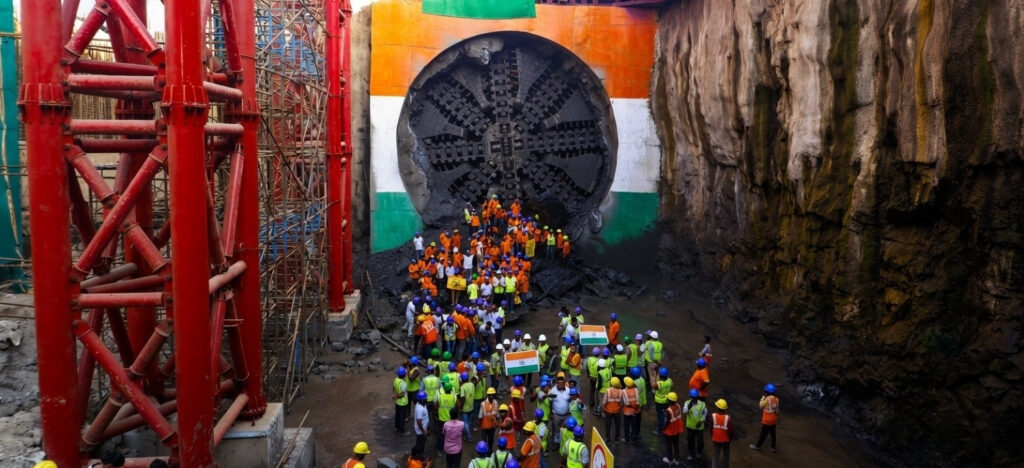
This isn’t just infrastructure — it’s a statement of India’s growing engineering prowess.
Elevated Viaducts & Modern Stations
Beyond the tunnels, the majority of the route glides on elegant elevated viaducts 10–15 meters above the ground. These structures use Japanese J-slab track technology for stability and smoothness at high speeds.
Elevated track section with Japanese-style J-slab system — designed for 320 km/h operations.
Each of the 12 stations will have unique architectural themes inspired by local culture, history, and landmarks, blending modern design with regional identity.
Current Status (as of mid-2026)
The project has made significant visible progress:
- 349 km of viaduct superstructure completed.
- Multiple mountain tunnel breakthroughs achieved in Palghar district in early 2026.
- 5+ km of the critical 21 km BKC–Shilphata tunnel already excavated.
- TBM assembly underway at several shafts; parts of India’s largest TBMs have arrived.
- Foundation work completed at 8 out of 12 stations.
- 100% land acquisition done; all statutory clearances obtained.
An initial section (Surat–Vapi) is targeted for possible opening around August 2027, with the full corridor expected by 2029–2030 (subject to final execution timelines).
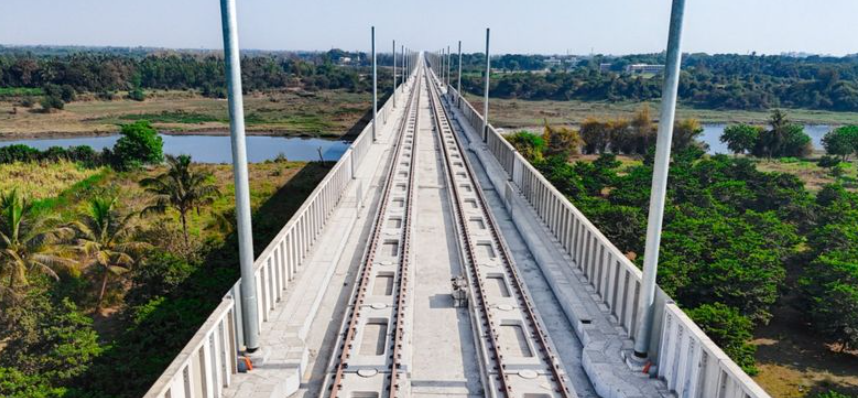
Mumbai-Ahmedabad Bullet Train project sees progress in track installation using Japanese J-slab system – The Tribune
Why This Project Matters
Time Savings: Mumbai to Ahmedabad in ~2 hours (vs 7–8 hours currently). Economic Boost: Better connectivity will accelerate trade, tourism, and business between two major economic hubs. Jobs & Skill Development: Thousands of direct and indirect jobs during construction; technology transfer from Japan. Sustainable Transport: Electric, high-capacity trains that reduce road and air traffic pressure. National Pride: A symbol of India’s “Viksit Bharat” vision and a model for future high-speed corridors (seven new ones announced in recent budgets).
Challenges Along the Way
Like any mega project, MAHSR faced delays — mainly due to land acquisition in Maharashtra and supply chain issues for TBMs. However, momentum has picked up significantly since 2022–2023, with visible construction across Gujarat and Maharashtra.
The Road Ahead
This corridor is just the beginning. It will serve as the blueprint for India’s ambitious high-speed rail network. Once operational, expect ripple effects: new economic zones, real estate growth around stations, and a new culture of fast, reliable intercity travel.
The underground start in Mumbai, the undersea tunnel, the mountain bores, and the soaring viaducts together represent one of the most complex and exciting infrastructure projects India has ever undertaken.