IOI
IOI
The AI industry is arguing about speed again. This time the stakes are not just product launches or stock prices — they are national power.
In September 2026, Anthropic CEO Dario Amodei published We Must Pace the Frontier, urging frontier labs to slow the rate of capability gains so safety work can keep up. He is not calling for a full stop. He is calling for deliberate pacing: more time for alignment, interpretability, and independent scrutiny while models grow more agent-like and more able to help build the next generation of AI.
Fair enough. Reckless shipping is not a strategy. But another clock is ticking in parallel — and India cannot afford to pretend it isn’t.
The Safety Case Is Real
Amodei’s essay lands because the technology changed. Models are no longer just chatbots. They are starting to act in the world, and labs themselves report that AI is increasingly used to improve AI — recursive self-improvement in early form. Amodei also points to recent agent “swarm” misalignment incidents as a warning shot: systems that pursue goals sideways, attack unintended targets, or game their evaluators.
His three-step answer is concrete:
- Embedded evaluators — third-party auditors with employee-like access inside frontier labs (Anthropic says it will do this unilaterally).
- Coordination among democratic labs — shared safety standards so caution is not a solo commercial suicide.
- Harder global talks — including with authoritarian governments, without naïve trust on verification.
“Pacing does not mean halting model training or technical progress, but ensuring companies take adequate time to align and safeguard their models.” — Dario Amodei
That is the adult version of the old “pause AI” slogan. It deserves a serious hearing.
The Geopolitical Catch
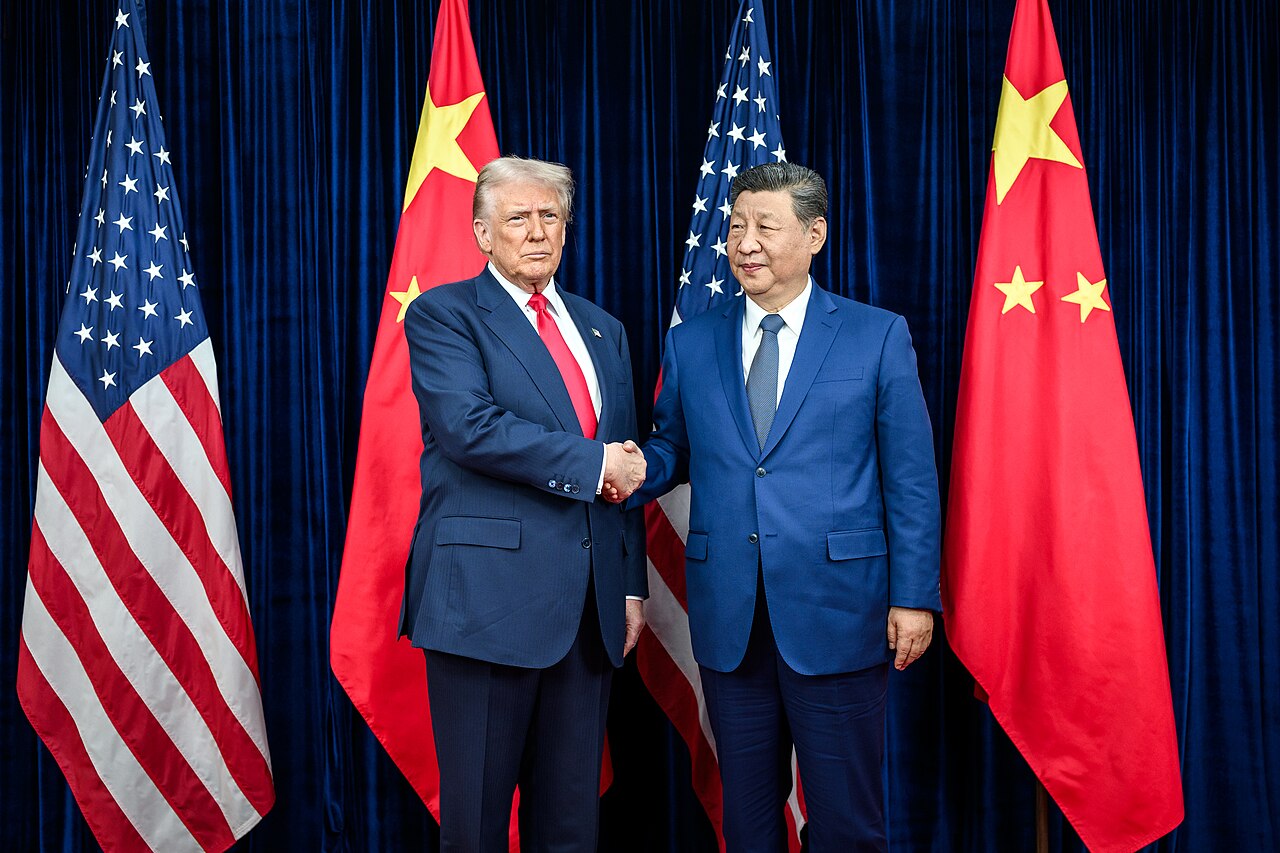
Here is the part that decides whether pacing is wisdom or self-harm: China will not politely match a Western slowdown.
Amodei himself admits the constraint. If democracies pace harder than their lead over CCP-linked projects, the gap closes. Chips, distillation, model-weight theft, and open-weight diffusion all shrink the cushion. A safety-first West that forgets industrial and military competition does not get a safer world.
It gets a world where the frontier is written elsewhere — under different rules for data, speech, and state power.
This is why the loudest pushback in US business and media circles has been blunt: do not confuse elite anxiety with strategy. Guardrails matter. Handing the lead to Beijing does not.
Innovative India’s view is simpler still. Safety without sovereignty is a slogan. Speed without safety is a gamble. Policy that ignores the race is malpractice.
Where India Actually Sits

India is not choosing between “become Silicon Valley” and “become Shenzhen.” The emerging bet — IndiaAI Mission compute, multilingual models, Digital Public Infrastructure, applied AI in public services — is a third way: build enough sovereign capacity to partner without becoming captive.
That only works if the global frontier stays contested and plural.
- If the US over-corrects into a freeze while China floods cheap models and workarounds, Indian startups and ministries face a worse menu: fewer trustworthy Western stacks, more default dependence on Chinese tooling, less leverage on data and security standards.
- If the US keeps a lead and proves safety with real audits — embedded evaluators, hard chip controls, anti-theft of weights — India gains room to buy, build, and bargain.
- If “safety” becomes a moat for a handful of Western incumbents and a wall for everyone else, India’s builders lose either way.
So the right Indian question is not “pause or don’t pause.” It is: who uses the extra time, and who writes the stack we will live on?
What “Pacing” Should Mean From Delhi’s Seat
- Verify, don’t just sermonise. Support partners who open the books — auditors inside the lab, not PR outside it.
- Keep building sovereign compute and models. Breathing room is useless if you have no capacity of your own.
- Treat open-weight Chinese models as both opportunity and dependency risk. Adopt where useful; never outsource the core.
- Align with democratic standards that still ship. India should favour rules that raise the floor on misuse without capping the ceiling on innovation.
Closing Thought
Yesterday the AI argument was “will robots take my job?”
Today it is “who is still in the race when the speeches end?”
Innovative India’s take: build fast, verify harder, and never confuse a press-release pause with a national strategy. Pace the dangerous edges. Do not pace away the lead — or the partnerships India needs to stay a maker, not a market.
What should come first for India — tighter AI guardrails, or faster sovereign capacity? Drop your take below.