IOI
European policymakers have long argued that carbon border levies are a necessary tool to prevent carbon leakage and accelerate the global net-zero transition. At the Berlin Global Dialogue 2026 on 22 October, Piyush Goyal, Union Minister of Commerce and Industry, Government of India, presented the counter-case from the developing world—arguing that when economies that industrialised on decades of coal begin taxing developing nations at the border without delivering promised climate finance, climate policy begins to look like trade protectionism.
The arithmetic of carbon and the myth of shared blame
At the heart of Europe’s Carbon Border Adjustment Mechanism (CBAM) lies a convenient sleight of hand. By pricing the carbon embedded in imported steel, aluminium, and cement as if every economy started the race from the same line today, European policymakers erase two centuries of industrial history. When it is suggested in Western capitals that “all of us” are responsible for the climate crisis, the numbers tell a very different story.
“Who’s responsible for this mess in the first place? Where did this ozone layer get damaged? Who sent all that carbon up there? I support 17% of the world’s population. My contribution to that carbon up there is less than 3%.”
Piyush Goyal, Union Minister of Commerce and Industry, Government of India, at the Berlin Global Dialogue 2026
That single contrast exposes the flaw in treating current emissions in a vacuum. Europe represents roughly 3% to 4% of the world’s population, yet accounts for nearly 20% of cumulative historical carbon emissions—built up over decades of burning coal to keep energy cheap while its industries scaled. Even on an annual basis today, as NDTV and The Hindu reported from Berlin, an Indian citizen’s per-capita carbon footprint remains less than 10% to 15% of a European citizen’s, while per-capita waste and environmental consumption in Europe run seven to eight times higher. Dismissing per-capita math, as European industry voices often try to do, amounts to arguing that an individual in Mumbai or Ranchi has a smaller right to electricity, housing, and mobility than an individual in Milan or Munich.
India is conscious of and committed to its role in climate action. https://t.co/ONx3nB0ik8
— Piyush Goyal (@PiyushGoyal) October 22, 2026
How an unpaid $100 billion Paris pledge broke the West’s moral authority
The debate over border taxes cannot be separated from the broken bargain of the 2015 Paris Agreement. At COP21, Prime Minister Narendra Modi helped rally the Global South behind a global climate compact on one explicit condition: Common But Differentiated Responsibilities. The nations that grew rich by exhausting the world’s carbon budget agreed to pay a greater share of the transition cost, pledging $100 billion a year in climate finance and technology transfer to help developing countries and vulnerable island nations decarbonise without sacrificing their citizens’ standard of living.
Eleven years on, as Goyal pointed out in Berlin, developing nations haven’t seen “a nickel or dime” of that genuine grant support. Instead of delivering the promised capital and low-cost clean technology, the European Union built a regulatory tollbooth. Combined with the EU Deforestation Regulation (EUDR) and more than 75 overlapping national and bloc-wide rules, CBAM penalises developing economies for lacking the very transition finance the West promised and failed to provide.
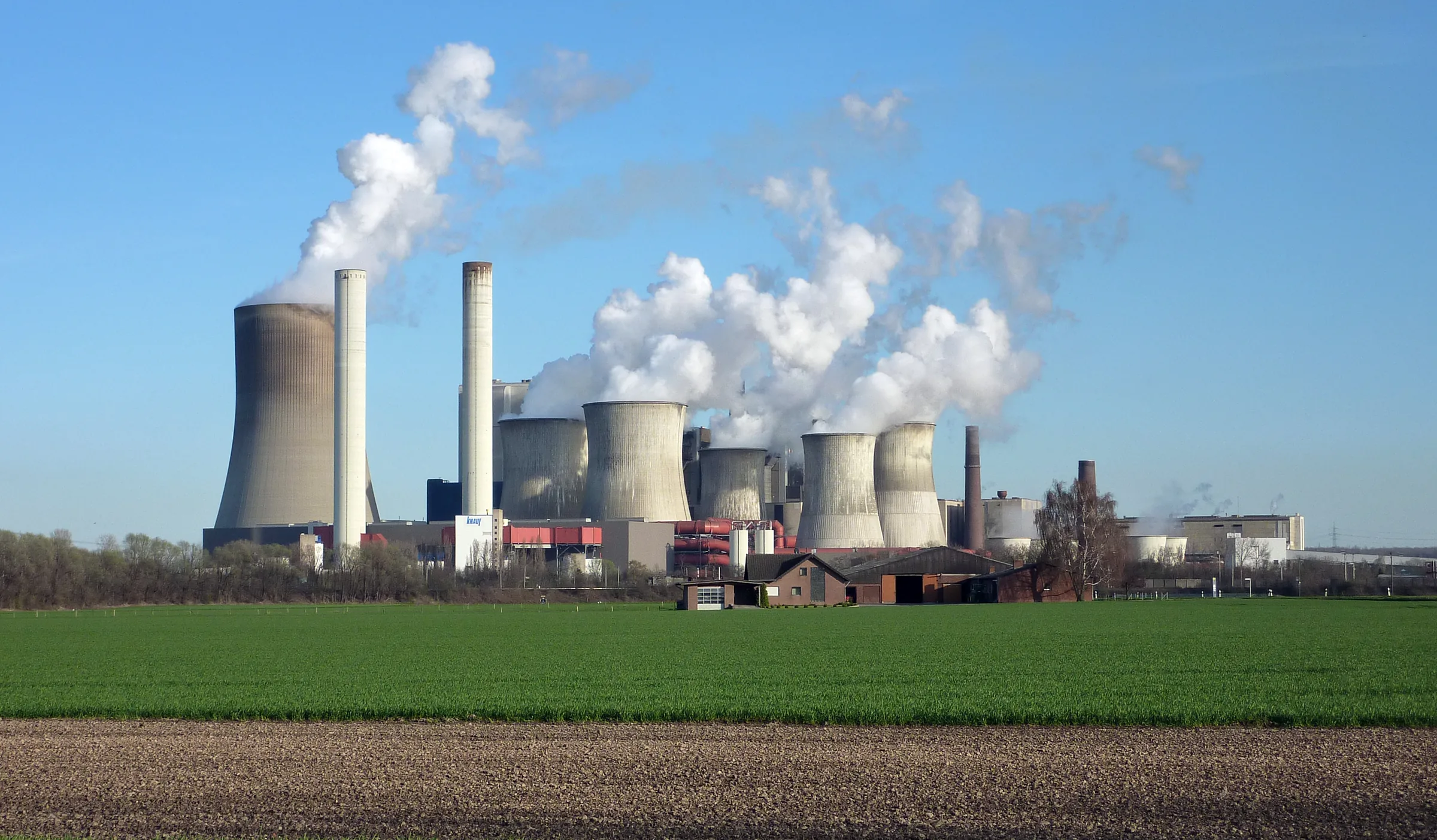
Why taxing steel at the border will backfire on Europe’s own factories
Where Goyal’s critique cut deepest was not on climate ethics, but on cold industrial economics. Europe already faces energy costs several multiples higher than those in the United States and Asia, alongside a widening productivity gap in technology and manufacturing. Layering carbon border levies and a 50% steel import tariff onto primary industrial inputs doesn’t insulate European industry—it starves it of affordable raw materials.
“You put a CBAM on yourself. You put a 50% import duty to bring steel into your country. You are inviting disaster—cost of living will go up, your people will be unhappy, and your industry will be outpriced.”
Piyush Goyal, Union Minister of Commerce and Industry, Government of India
As The Financial Express noted, every port, airport, German autobahn, utility grid, and water pipeline built in Europe requires vast quantities of steel, aluminium, and cement. Artificially inflating the cost of those foundational inputs cascades straight down the value chain into machinery, construction, and automotive manufacturing—an industry in Germany that has already lost significant ground over the past decade. Worse still, in a reciprocal trading world, unilateral non-tariff barriers inevitably invite counter-measures from trading partners.
India’s global partnerships are built on complementary strengths. https://t.co/M72GzEKayg
— Piyush Goyal (@PiyushGoyal) October 22, 2026
New Delhi’s leverage: clean energy at home, $60 trillion in trade corridors abroad
What makes India’s pushback in Berlin so consequential is that it comes from a position of industrial and geopolitical strength. India is not asking for a pass on decarbonisation; it is running one of the world’s fastest-growing renewable energy programmes, investing heavily in green hydrogen, and actively cleaning its steel production—all while securing food and reliable baseload power for 1.4 billion citizens.
At the same time, India has quietly rewired its global trade architecture. Before 2014, India’s free trade agreements covered economies worth a combined $10 trillion in GDP. Over the past four and a half years alone, New Delhi has signed nine FTAs spanning 38 developed economies with a combined GDP of $60 trillion, with active negotiations across Canada, the GCC, Mercosur, Israel, and SACU set to open preferential access to 76% of the world economy ($85 trillion out of $115 trillion).
Even with Europe, the path forward remains wide open if pragmatism prevails over bureaucracy: pairing Germany’s Mittelstand engineering and European electrolysers with India’s scale and youthful workforce to produce green hydrogen and green steel at prices the world can actually afford. You can watch the clean, uninterrupted clip of Union Minister Piyush Goyal’s remarks in Berlin below (via The Economic Times):
Sources: Piyush Goyal on X, Berlin Global Dialogue 2026 Official Replay, The Economic Times, NDTV, The Hindu, and The Financial Express.